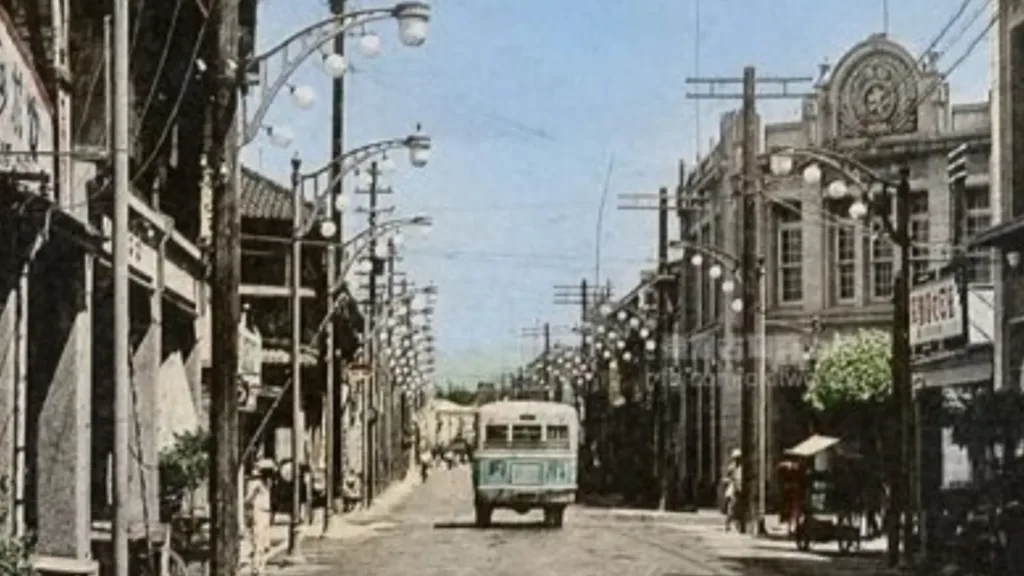
Taichung Central|Beginning of a Century of Prosperity
As time flows by, faded photographs piece together traces of the city spanning half a century.
Along the once-vibrant Shinseibashi-dori, the Suzuran lights still hang gently above the streets — quiet glimmers in the night, waiting for every soul returning home.
Classic Western-style buildings and old shop signs face each other, silently writing the historical prelude of the opening of Xinsheng Bridge in 1930 in the morning light, together with the Green River.
Shinseibashi-dori|Taichung's earliest bustling street
In 1908, Prince Kan'in Kotohito of Japan visited Taichung Park to preside over the opening ceremony of the Taiwan-wide railway. To welcome this grand event, the authorities specially built a bridge across the Green River, which was then called "Shinsheng Bridge". The street extending in front of the bridge was also named "Shinseibashi-dori".
This avenue, stretching straight from Taichung Railway Station, was one of the first roads to be paved with asphalt during the Japanese occupation. It was lined with shops and bustling with people, becoming the most prosperous commercial district in Taichung at the time, and was known as "Taichung Ginza".
After the war, Shinseibashi-dori was renamed the familiar "Zhongshan Road" of today.
The bridge was subsequently renamed "Zhongshan Green Bridge" and became a recognized historical building in Taichung City, quietly guarding the memory of this land.
Suzuran Street Light|Lighting up Taichung Ginza's dim light
In 1928, merchants of Shinseibashi-dori came together to fund a series of elegant Suzuran street lights in celebration of Emperor Showa’s enthronement. By the year’s end, the softly illuminated avenue had become one of the most iconic sights of the city’s prosperous era.
The lily of the valley is a flower that symbolizes purity and happiness. During the Japanese occupation, streets in Japanese-populated areas were named after lily-of-the-valley-shaped streetlights.
Xinsheng Bridge is therefore also known as "Lily of the Valley Street".
The lights hanging on both sides of the street illuminated the figures of countless people coming and going in Taichung, and also illuminated the original prosperous outline of this city.
Green River|River of Humanity in Taichung
Green River, formerly known as "Unnamed Creek" and "Xinsheng Creek", is the birthplace of Taichung City's culture, with its earliest history dating back to the Qing Dynasty.
In 1912, the Governor-General of Taiwan inspected the Xinsheng River and renamed it after the lush green scenery along the riverbank.
In the early days of Japanese rule, Taichung underwent several planning and renovation projects. In 1903, construction officially began based on the urban redevelopment plan. In conjunction with the construction of the longitudinal railway, the river channel was straightened, laying the foundation for the modern development of Taichung.
This section of the Green River flowing through the central district witnessed the rise and fall of the Shinseibashi-dori, and also witnessed Taichung's transformation from a small border town in the Qing Dynasty into a railway hub. Today, the newly renovated Green River flows again through the old city, continuing the deepest urban memories belonging to Taichung.